About the Space
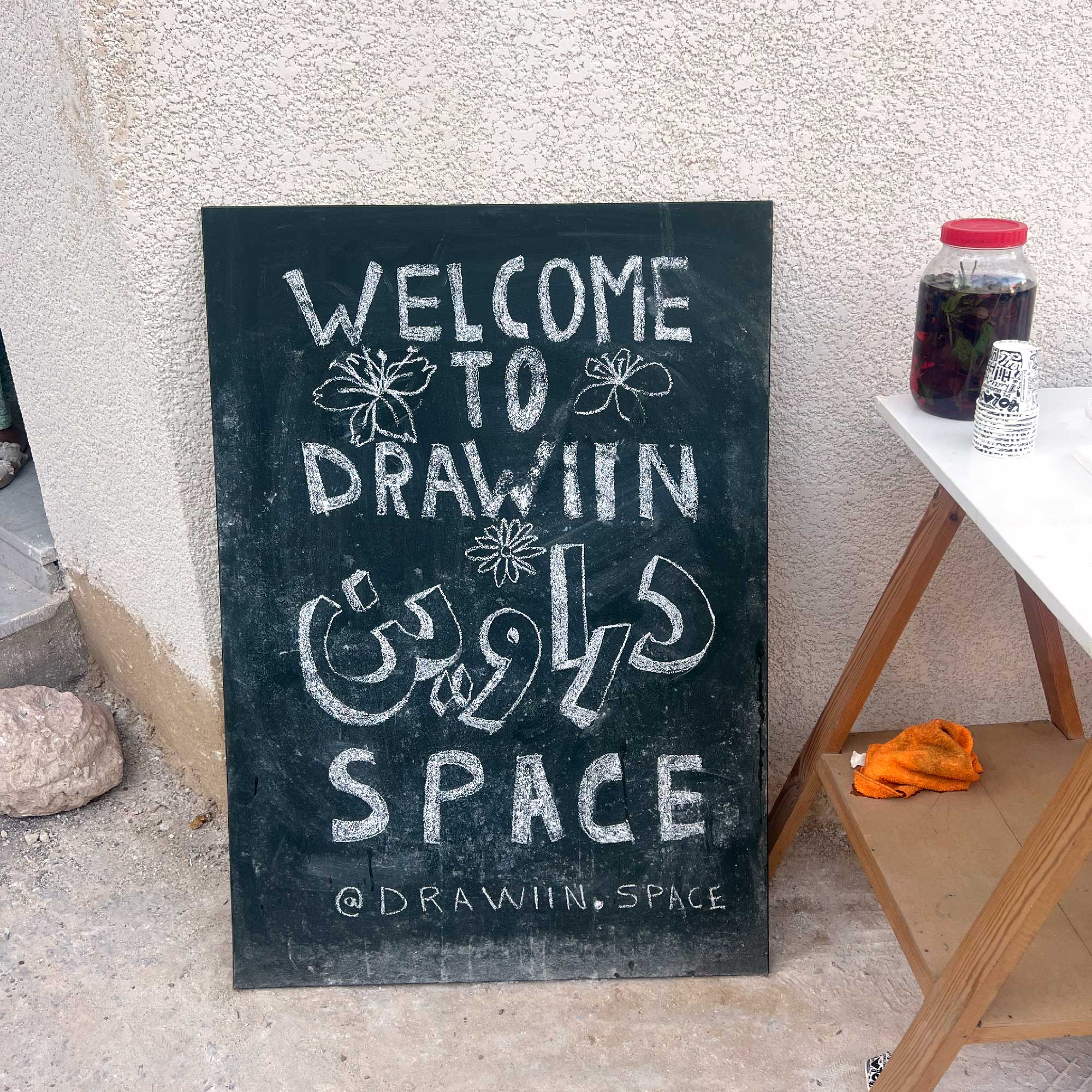
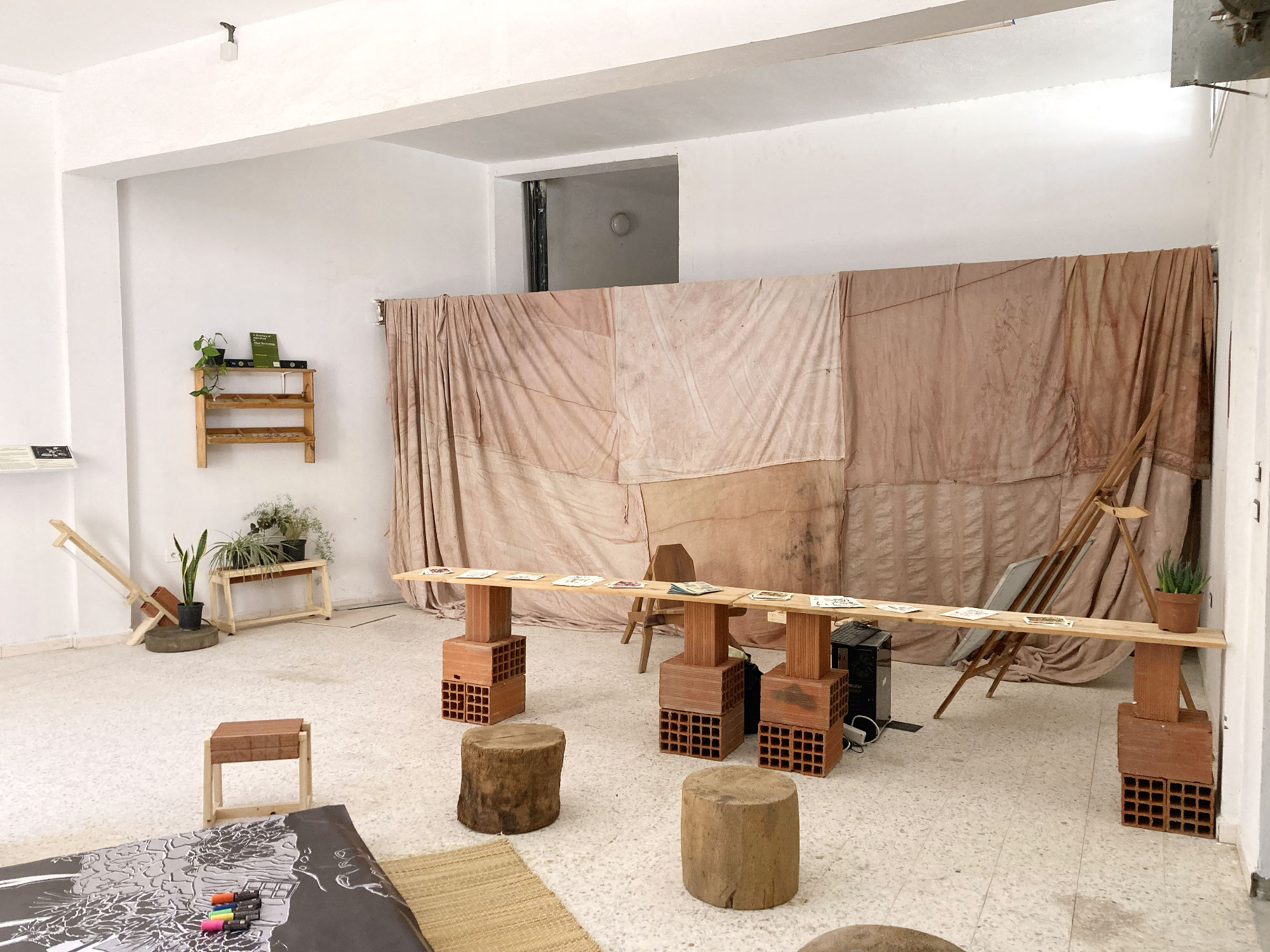
Drawiin دراوين is a new artist-run space, collective design studio, and community library in Carthage, Tunisia focussed on environmental communication. We collaborate closely with other artists, organizations, and our neighbors to produce prints, publications, landscape designs, films, workshops, pop-up events, and more.
Our Location & Approach
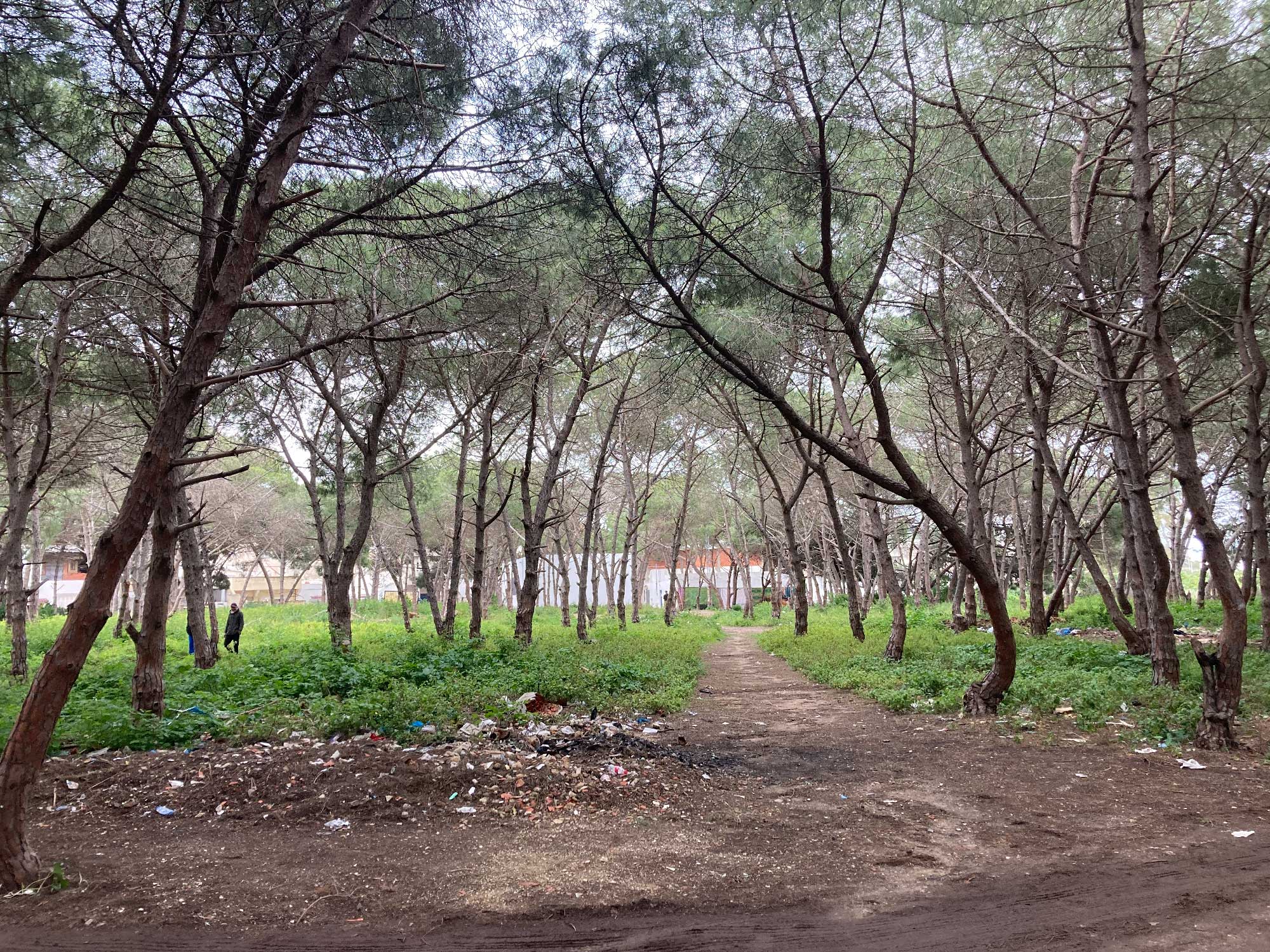
Carthage Mohamed Ali is covered in pine trees. A forest, at first glance. We do not know exactly by whom, or under what policy, the trees were planted, but their monoculture fragility gives them away. It is alleged that the creation of this urban forest was meant to function as both an ecological lung and a visual buffer, safeguarding the historical landscape from “urban sprawl”. Policies, after all, decide who gets to be seen and heard, and who gets to be hidden and ignored. Whether rooted in colonial-era or a post-independence , this landscape reflects a historical continuum of territorial control where forestry is used to police.
There is also a recurring discourse, especially after the revolution, around the “illegal” constructions built within the forest, framed as an ecological and urban threat. Two things can be true at once. We propose a closer and a more nuanced look at the double standards surrounding what is considered an acceptable buildable zone and what is not. These decisions are often deeply tied to class. They are also bound to racial hierarchies inherited from colonial cartographies, dictating which bodies are perceived as legitimate inhabitants and which are treated as spatial polluters. At the same time, the forest itself, despite its greenery, already embodies a form of ecological imbalance.
We often confuse greenery with nature. A hectare of wheat can look pastoral when it is actually a pasta industry. Greenery has always been a poor metric for ecological and especially social balance. In Carthage Med Ali, pine husks have become the new salt. Salt once sterilized the Carthaginian mythos. Now it is garbage, layers of acidic pine residue, dry accumulation shaping the ground itself. In local Facebook groups, inhabitants repeatedly ask for the forest to become a park, for better garbage disposal systems, for maintenance, for care.
The social dimension cannot be separated from the environmental one. Carthage Med Ali is considered a “popular” neighborhood, and its demands remain diluted or deprioritized by municipalities and support systems alike.
Communal projects require a shift in perspective. They require listening differently, and understanding agricultural projects as questions of class and social justice as much as soil and seeds.
Designing a communal garden here is producing a plan, but also about methodology, proximity, and community engagement. There is a desire from us, as Drawiin, to create projects that are mindful, useful, and grounded in reality. Our first material interventions will be localised: opening a community seed library and introducing plant varieties. To integrate our neighbours into decisions, to recognize that we are guests, we actively counter the mechanisms of green gentrification by establishing the space as a direct site for listening, where our talks, workshops, and communal garden agenda are guided by the expressed needs of our neighbors, to put our own expertise, whether in the landscaping, or design, to use in making our shared spaces – and what already is, better – more socially informed, and more enjoyable :)